Showing posts with label contact enforcement. Show all posts

Monday, 7 July 2014

Parental Alienation: The Upper Courts on Viagra

Back in 2004, in the case D (A Child) [2004] EWHC 727 (Fam), Lord Justice Munby took the unusual, and at the time brave step, of being critical of the court's "impotence" in helping in intractable contact dispute. He said:
"2. From father's perspective the last two years of the litigation have been an exercise in absolute futility. His counsel told me that father felt very let down by the system. I was not surprised. I make no apology for repeating here in public what I then said in private:
"He is entitled to. … I can understand why he expresses that view. He has every right to express that view. In a sense it is shaming to have to say it, but I personally agree with his view. It is very, very disheartening. I am sorry there is nothing more I can do."
2004 headlines (from memory) discussed the courts being impotent in contested cases. Munby accepted (at paragraph 8) that children and fathers suffered due to the bias in the system. Fairness dictates us saying we also see mothers being failed and marginalised when the father is handed sole residence and seeks to alienate the child. Few could argue that in all cases, the children are victims, and in most cases the fathers were, given that the court routinely gave sole residence to the mum, and then failed to enforce contact orders. Many fathers left court crying, and there was no follow up to assess the harm done to the children.

This is why we still maintain the courts should make shared residence orders (or their modern equivalent under child arrangements orders). Power corrupts... and the court handed absolute power to the mother in over 90% of cases. The problem though was never gender, but the issue of control exacerbated by a lack of action by the court when the 'parent with care' ignored its orders. The courts lost trust, and lost control, as parents thwarted orders in the knowledge that nothing would happen as a consequence.

Munby was also pushing for more openness, and wider powers for the court. Some of those powers followed when the Children and Adoption Act 2006 was introduced (coming into force in 2008), but the courts were slow to exercise those powers. Too many cases continued to be left unresolved when, if the resident parent opposed contact, the courts and CAFCASS would wring their hands, looking apologetic, and the child would be left, unprotected, in a toxic environment with their relationships severed by a controlling and at times malicious parent.

We said, time and again, parental alienation should be treated as a form of child abuse.

The Change
There has been a shift in the courts. A new wave of Lords Justice and High Court Judges (Mostyn, Ryder, McFarlane, Parker...) have crept in the door... more capable, more critical, more modern and more open-minded. Munby was ahead of his time (for the courts), but he is not alone, and is now President of the Family Court.

http://www.thecustodyminefield.com/flapp/pacaselawmenu.html
There is now a wide range of case law which might significantly arm the lower courts with tools to combat a form of child abuse where there was little to no protection in past years... in cases involving parental alienation. No assumption should be made that the lower courts are aware of these. It is the job of counsel or the litigant-in-person to make use of them, and be aware of them. The legal profession have their own family law libraries... we endeavour to ensure that unrepresented parties have access to this information too, and that relevant information is easily accessible. All major cases related to parental alienation are now wrapped up in a single library.

The most recent judgment, given by Lord Justice Ryder (the second youngest high court judge in 250 years, head of judicial modernisation, and now a Lord Justice of Appeal) gives judgment in W (A Child) [2014] EWCA Civ 772. 

The W (A Child) [2014] EWCA Civ 772 judgment
There was a finding that the child had been abused by the grandfather, but the mother persisted in
allegations against the father, and prompted the child to make allegations in this regard. The judge had given clear warning of the powers available to him:
"[30] At the outset of proceedings I warned both parents of the serious consequences of pursuing this fact finding exercise. Were the allegations now make [sic] of sexual abuse true, then the court would be finding [the child] had been abused twice over, both by the grandfather and, later, by father. It would almost certainly mean, given [the child's] distress, the need for a section 37 report, and probably an interim supervision order, and very careful evaluation of the need to protect, of a risk assessment, and the need to manage, with care, a deeply damaged little girl.
[31] Were the allegations untrue, then mother would be guilty of feeding her with untruthful stories, of an obsessive nature, about sexual abuse. Again, I would almost certainly be directing a section 37 report and making an interim care order, as [the child] would then need speedy removal from an abusive home."
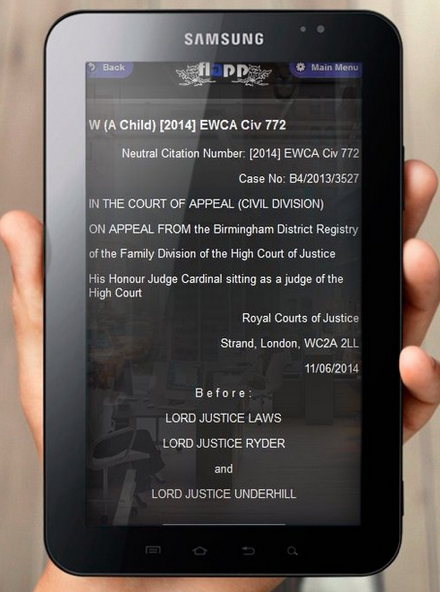
http://www.thecustodyminefield.com/flapp/caselaw/2014-ewca-civ-772.htmlThe mother sought to appeal a decision removing her child from her, and placing the child in local authority care via an interim care order.  The mother argued that she posed no risk to the child's safety. At appeal, the court agreed with the trial judge, recognising the emotional harm caused by the mother´s having manipulated the child to make false allegations against the father.

The judgment had been accepted by the local authority and children´s guardian. The father and they opposed the appeal.

The court accepted it was "unconscionable" to leave the child in the mother's care. Worth noting paragraph 21 of the judgment:
"21. I ask the question rhetorically: given the court's findings, how could the judge leave the child with the mother?  No level of sufficient support and necessary protection was described by anyone. To leave the child without protection would have been unconscionable. One has only to consider physical abuse to a child that gives rise to a similar index of harm to understand that such a position was untenable. The submission made on behalf of the mother that her care of the child had in all (other) respects been good or even better than good simply misses the point. More than that level of care was needed to protect this child from her own mother."
Regarding the reasons why the child wasn't placed immediately in the father's care, this is addressed at paragraph 22:
22. The distress that had been engendered in the child, as advised by the children's guardian, sadly made an immediate move to the father impossible.
This, to our mind, is a landmark judgment, with the court, in this instance, placing the emotional harm caused by parental alienation on an equal footing with physical abuse, and accepting that the harm done to the child met the threshold criteria of significant harm.

Caution and Hope
There is no guarantee that such critical examination of cases will be consistent across the country, or even from judge to judge in specific regions. There is no guarantee that the judiciary in the lower courts are aware of what other courts are doing. That said, there is now far more case law to provide litigants and their counsel (if represented) with case law to support arguments and proposals for the court to consider. Whether there will be a just outcome also is also somewhat dependent on their ability to present their case and focus on the strong arguments rather than getting sucked into the minutiae or drawn into tit-for-tat allegations.

What there is now, is some hope for parents and children who face malicious alienation, compared to a decade ago, when there was none.

Click any of the images (except the viagra!) to be directed to content!

Saturday, 5 July 2014

Submissions to the EU Parliament on Failings in UK Family Justice


Vincent McGovern is Chair of Central and North London Branches of Families Need Fathers, part of the UK’s largest shared parenting charity, and has recently returned from Brussels having presented evidence to the Petitions Commission of the European Parliament in its session concerning failings in the Family Justice Service. He was also supporting a German father, giving evidence to the EU Review related to the efficacy (or lack, thereof) of the Brussels II Revised Regulations.

The German Father's Submission on cross-border Contact Order Enforcement.
In relation to the German father’s submissions, allegations involved the UK courts ignoring a contact order signed under Bis II in another member state and a failure to enforce that agreement. Further, that there was a lack of legal aid for the German father despite the other party having a six figure sum funded by the state. The father intimated there was a breach in equality of arms, and in this, a failure regarding his Article 6 rights to a fair hearing under the human rights legislation. The father invited the EU Parliament to investigate why the UK Courts do not meet their obligations under international agreements, and asked that, if the Commission accepts his evidence that there has been a breach of EU law, they should commence infringement proceedings with the European Court of Justice against the UK Government. The inference was that by not enforcing the order made in another EU state, the court had also infringed on both his child’s and his right to family life. The father was critical of the vast sums of money spent on what he considered an ineffective legal process.

Mr McGovern's Submissions on Abuses within the MARAC Process
Mr McGovern also gave evidence related to the processes followed by the UK’s Multi Agency Risk Assessment Conference (MARAC) and their being open to abuse. Indeed, he argued that here too, the system fails to uphold the citizen’s Article 6 and Article 8 Human Rights.  Mr McGovern raises criticism that when allegations are made, the Conference takes hearsay evidence from one party, especially when domestic violence is alleged, without the opportunity for defence or disclosure regarding the nature of allegations made. He went on to explain that the MARAC process is shrouded in secrecy, and he claimed evidence from a Freedom of Information request that evidence is only taken from females, lending the agencies involved open to criticism for gender discrimination. Mr McGovern went on to explain that this gender barrier has resulted in male victims of domestic violence being blocked from having access to local authority services, and children not having been protected from harm, due to the unipolar nature of such investigations.

One major criticism was that the accused is not provided with the evidence used by the MARAC to reach a finding. Following the finding, Social Services will meet both parents, but will only divulge the finding rather than the evidence upon which it was based.  Mr McGovern argues that this secrecy and a failure to disclose evidence is a breach of Article 6 of the Human Rights Act.

The verdict of the undefended MARAC inquiry can equip a vexatious litigant with the ammunition to approach the Family Court without notice to the father, and armed with the undefended MARAC findings, the Court will automatically make orders removing the father from both the family home and the children’s. Should he breach the orders made, he may face jail. 

Mr McGovern has contributed to a number of successful Ombudsman Investigations where findings were made against London Borough of Brent Social Services, Brent Children’s and Adolescent Mental Health Services (C.A.M.H.S), the Solicitors Regulatory Authority, Brent Primary Care Trust (a divisional arm of the National Health Service), and the Children’s and Family Court Advisory Support Service (CAFCASS).

Despite findings against and criticism of these organisations, Mr McGovern argues that the systems and processes undertaken by Multi Agency Risk Assessment Conferences continue to be incompatible with the Human Rights Act, and violate human rights in the UK.

The representations to the EU Parliament come only days after Mr Justice Tyzack criticised teachers and specialists for accepting abuse allegations without question. The judge emphasised that professionals need to keep an open mind, and not take allegations at face value.

TCM Comment
The costs involved in cross-border litigation, and litigation concerning jurisdictional disputes or other aspects of international family law are staggering. It's not uncommon to have a parent asked for a down payment of £30,000 for a leave to remove case, with estimates given of up to £100,000 in legal costs. In the German father's case, the costs for both sides have exceeded £200,000. All this to enforce an existing order. 

In relation to the other matters raised by Mr McGovern, aside from the significant harm done to the falsely accused and their children, false allegations draw diminishing resources from support services for genuine victims of abuse. The transparency wanted by Sir James Munby needs to extend beyond the court to the MARAC process.  It staggers us that someone can be barred from seeing their children and lose their home, in a closed court, following a closed investigation, where not all evidence is disclosed, and where the accused does not have representation. To my mind, not a system to be proud of, or one which supports transparent and equitable justice. Due to the draconian nature of injunctive orders, we have no doubt that allegations should be heard against the test 'beyond reasonable doubt' rather than upon the 'balance of probability' as happens in the family court. Violence and abuse are criminal matters, should be treated as such, as should the making of false allegations, and heard in the criminal courts.

The court has to take a cautious approach when allegations are made, but there also needs to be greater use of penalties for false allegations. Tyzack's cautionary words need to be heeded. There is gender bias in DV services, but this reflects an attitude in society that violence against men is more acceptable, or even a matter for humour.

If you're sceptical, watch the video below, published by Mankind (and if the thought enters into your mind "he probably asked for it", would you hold the same thought in respect of the woman being abused).


Tuesday, 24 June 2014

Parental Alienation Related Case Law and Resources

http://www.thecustodyminefield.com/flapp/pacaselawmenu.html
Parental alienation, where children are refusing to come to contact, is one of the most painful and difficult areas of family law.

We promised we'd be uploading integrated case law libraries as part of our Family Law App... and the fifth has been uploaded today to support our range of guides aimed at supporting parents where contact has broken down (for the case law library, click on the image to the left). 

Where publicly available, the full text of judgments is available to be read onscreen or downloaded for use in proceedings. We've dramatically slimmed down the file sizes to make the information fast loading in the event you're leaning out of a court window struggling to get a mobile phone reception!

More libraries are coming over the next fortnight as part of the current upgrade project.


Know your options, understand the approaches that senior courts recommend in relation to contact breakdown (make reference to the Parental Alienation Case Law Library), know the tools available, and be pro-active in making recommendations to the court.

If experts are suggested to assist in contact being re-established such as psychologists or counsellors, make sure you check them out to ensure they're properly qualified, experienced, and members of relevant professional organisations. In 2012, an investigation found 20% had no qualifications at all, and a further 20% lacked the necessary experience. Tools to help you check are provided in our Useful Directories section.

Sunday, 13 October 2013

Intractable Contact Disputes: Important New Case Law`

A (A Child) [2013] EWCA Civ 1104
In this case, the court had acknowledged that it was the mother's intractable and unreasonable position which was the bar to contact, but felt helpless to intervene. The case came after years of returns to court. An important judgment, where the trial judge had made an order allowing only indirect contact for the father, restricted to Christmas and his daughter's birthday. This was an intractable contact dispute, caused by the mother's hostility to contact. While not an alienation case per se (albiet the child is clearly torn between her own wish for contact and loyalty to the mother and her opposition), McFarlane LJ upheld the approach taken in Re S (Transfer of Residence) [2010] EWHC 192 (Fam) that while noting the importance of a child's wishes and feelings, the court must consider too whether those wishes and feelings are rational and reasonable.

MacFarlane endorses Munby LJ's guidance in Re L-W (Children) [2010] EWCA Civ 1253 that there needs to be judicial continuity, judicial case management including effective timetabling, a judicially set strategy for the case; and consistency of judicial approach. He goes further in paragraph 60:
´If, as part of that strategy, the court makes an express order requiring the parent with care to comply with contact arrangements, and that order is breached then, as part of a consistent strategy, the judge must, in the absence of good reason for any failure, support the order that he or she has made by considering enforcement, either under the enforcement provisions in CA 1989, ss 11J-11N or by contempt proceedings. To do otherwise would be to abandon the strategy for the case with the risk that a situation similar to that which has occurred in the present case may develop; to do otherwise is also inconsistent with the rule of law.´
The father's appeal was successful. While the outcomes recommended by the trial judge were not necessarily in themselves wrong, the systemic failures over a period of years did amount to a breach of the child´s and father´s right to family life under the Equalities and Human Rights Act and MacFarlane suggested the involvement of a multi-disciplinary team to progress matters. The matter was moved to the High Court for the father´s application for contact to be reheard.

It's important to consider that the Human Rights argument was supported by the unique facts of this case. It would be wrong to assume any inference as to a principle being established that the courts must uphold a father's right to family life (in Children Act cases, child welfare will always be the court's paramount consideration, and the litigant should focus on child welfare arguments first). In this case, the child wanted contact (albeit her loyalty was torn), the mother clearly opposed contact and there were case management failures.

There is a growing body of case law to support a parent faced by the other parent's hostility to contact. Things remain difficult, as the circumstances of this case are not uncommon.

The full text of the cases Re S (Transfer of Residence) [2010] EWHC 192 (Fam), Re L-W (Children) [2010] EWCA Civ 1253 and A (A Child) [2013] EWCA Civ 1104 can be viewed in smartphone/tablet friendly format on our online Family Law Application. We have also included A (A Child) [2013] EWCA Civ 1104 as a download in pdf format should you wish to refer to it in evidence.